

- Pick one narrow buyer before you write a single pitch
- Start with people who already trust you
- Run problem interviews before you sell
- Offer a founding-customer deal in exchange for something you need
- Track replies and conversions by channel every two weeks
Your product works. Your site is live. Your only signup so far is your mom, and she used a fake email.
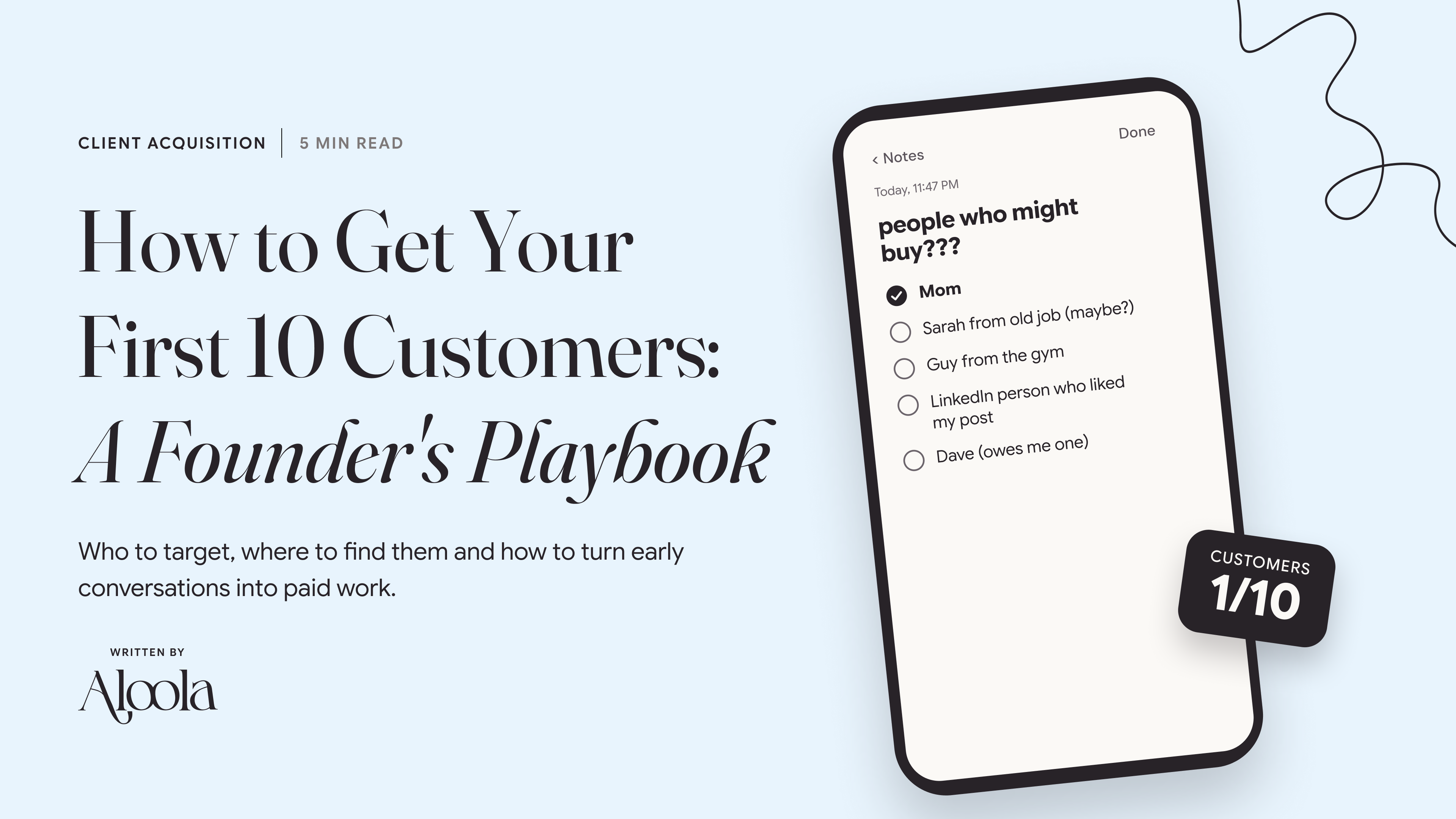
The first 10 customers are the hardest sale most founders make. Nobody knows you, you have zero proof, and your “pipeline” is a Notes app list titled people who might buy???
This playbook covers who to target, where to find them, and how to turn early conversations into paid work.
TLDR: Get your first customers by selling directly to people you can already reach. Start with your personal network, define one narrow ideal customer, and have real conversations before you automate anything. Offer a pilot or founding-customer deal, ask every early buyer for a referral, and track which channel produces paying customers.
Who should your first customers be?
Your first customers should be the people who feel the problem most and can say yes fastest. Selling to everyone slows you down, since every conversation needs a different pitch.
Define a narrow ideal customer profile
“Small businesses” is a category the size of a continent. Narrow it until you could name 20 real companies that fit.
Write one sentence that describes your best-fit buyer:
- Their role
- The type and size of company
- The trigger that makes the problem urgent
Example: “Operations leads at 10 to 50 person home service companies who just lost their scheduler.”
A sentence that specific tells you where to look and what to say.
Find where those customers already gather
List the places your buyer already spends time:
- Industry Slack groups
- Subreddits
- Trade associations
- Local business events
- Niche newsletters
Pick two or three and show up consistently before adding more.
Where do early-stage founders find first customers?
Start with your personal and professional network
Before you buy a lead list, scroll your own contacts. Former colleagues, past clients, and friends in your target industry can buy, refer you, or open doors. Yes, even the guy from your old job who replies-all to everything. He knows people.
Send a short, personal note that explains what you’re building and who it helps. Then ask if they know anyone who fits.
Show up in online communities
Drop a sales pitch in a Slack group on day one and watch the room go very, very quiet.
Answer three questions a week before you ever mention your product. Share what you’re learning and let people come to you. One useful reply in the right group can start more conversations than a week of cold outreach.
Send short, specific cold outreach
Nobody has ever read a 400-word cold email and thought, “Yes, more of this.”
A strong first message names a problem they likely have, explains in one line how you solve it, and asks a simple question.
Cold outreach template:
Hi [Name], saw that [specific detail about their company]. Most [role]s I talk to are still [doing painful task] in a spreadsheet. [Product] [one-line outcome]. Are you still [doing painful task] by hand?
Log every message so you can see which angle gets replies.
How do you turn conversations into paying customers?
Run problem interviews before you pitch
Ask about the problem before you mention your product. You’ll learn the exact words customers use, which sharpens your pitch. Many of these calls turn into sales on their own, because the buyer just explained (to you, out loud) why they need help.
Problem interview script:
- Tell me about the last time [problem] happened.
- What did it cost you in time or money?
- What have you tried so far?
- What did you like or dislike about that fix?
- If this were solved tomorrow, what would change for you?
Offer a founding-customer or pilot deal
Give early buyers a reason to commit now. Options that work:
- A founding-customer rate
- A paid pilot with a clear end date
- Extra hands-on support
Tie the offer to something you need in return, like feedback sessions, a testimonial, or a case study.
How do you get referrals from early customers?
Ask in the week they see a result, while you’re still their favorite vendor.
Make it easy:
- Send a short blurb they can forward
- Name the type of person you want to meet
- Thank every referrer, whether or not the intro turns into a sale
Referral blurb template:
Hey [Name], I’ve been working with [Your Company] to [result]. They’re looking to meet other [role]s dealing with [problem]. Worth a quick chat?
What should you measure in the first 90 days?
- Conversations booked each week, by channel: where attention is coming from
- Reply rate on outreach: whether your message lands
- Conversion from first call to paid: whether your offer lands
- Referrals from existing customers: whether customers like you enough to vouch
Review these numbers every two weeks. Shift your time toward the channel that produces paying customers and drop the ones that don’t. Yes, even if it’s the one you secretly enjoy.
Frequently asked questions
How long does it take to get your first 10 customers?
Timelines depend most on price, sales cycle, and how warm your network is. Lower-priced products sold through warm intros move fastest. High-ticket B2B services need more conversations per sale, so plan for a longer runway and track weekly conversations to see if you’re on pace.
Where should I look for my first customers?
Start with your existing network. Then pick two or three online communities where your buyer already spends time. Add targeted cold outreach once you know which message gets replies.
Should I give my first customers a discount?
Yes, if it’s time-limited and tied to something you need, like feedback, a testimonial, or a case study. Open-ended discounts set a low price anchor that’s hard to raise later.
Do I need a website to get my first customers?
You need a simple page that explains the problem you solve and who it’s for. It adds credibility when prospects look you up. Most early sales still come from direct conversations, so keep the site lean and spend your time talking to buyers.
Still pitching with messaging that sounds like everyone else? Aloola builds brand and positioning for founder-led companies in fixed-scope sprints, so your first sales conversations land faster. Book a call.